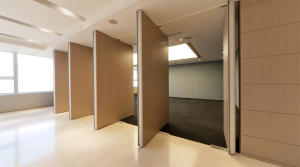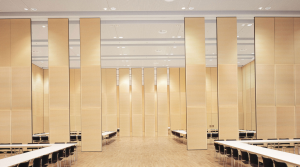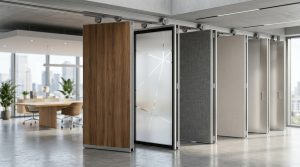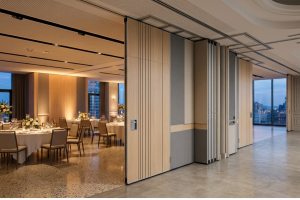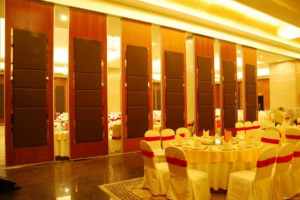


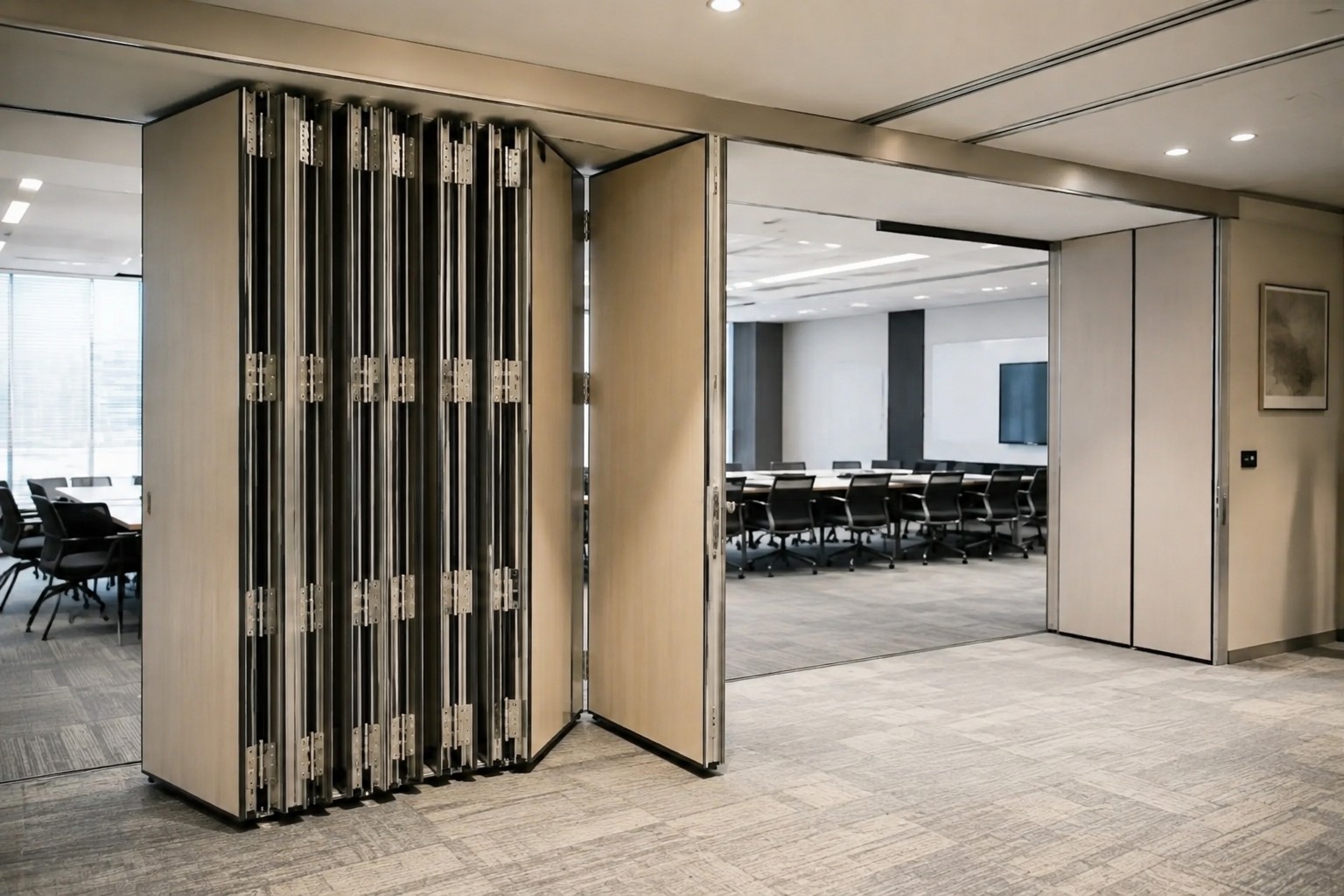
A folding wall partition divides a large room into smaller usable sections without permanent construction. Offices use them to split open floor plans, hotels use them to resize banquet halls, and schools use them to convert one hall into two classrooms within minutes. Conference rooms, restaurants, and commercial buildings rely on the same principle. How to choose the right folding wall partition depends on the room’s layout, acoustic needs, and how often the wall gets moved, not just its appearance.
Consider the Available Space
Measure the room before selecting a panel system. Ceiling height, wall length, and the depth of any storage pocket all limit which partition fits. A partition that folds flat needs a stack area at one end of the track, and that space has to exist somewhere in the room already. The configuration, straight run, curved track, or double track, should match how the room gets used once the wall is open.
Choose the Right Folding Wall Partition Type
Single-panel folding partitions work for smaller openings and lower-frequency use. Multi-panel systems handle wider spans and are used several times a day in banquet halls and training centres. Operable or movable folding walls sit between the two, offering manual or motorised control for spaces that are constantly reconfigured. The right type depends less on the room’s size alone and more on how many times a day someone actually opens and closes it.
Check Acoustic and Privacy Requirements
Sound transmission matters most in meeting rooms, classrooms, and conference spaces where two sessions run at once on either side of the wall. A partition rated for basic sound reduction lets speech carry through at normal volume. One built with dense core panels and compression seals at the floor and header cuts that transfer significantly. Check the acoustic partition rating in STC, and look closely at seal design, panel thickness, and how tightly the panels close against each other and the frame.
Consider Material, Durability, and Appearance
Panel faces come in laminate, fabric, wood veneer, and vinyl, each with different wear characteristics. A wall that gets folded and unfolded daily needs hinges and edge trim built for repeated cycling, not just a good first impression. Fabric-wrapped panels also help with sound absorption inside the room, not just transmission across it. Match the finish to the surrounding interior, but weigh that against how the surface holds up under regular contact and cleaning.
Evaluate Ease of Operation and Maintenance
Track systems, hinges, and locking mechanisms determine how smoothly the panels move and how long that smoothness lasts. A top-hung track with sealed bearings needs less adjustment over time than a floor-guided system exposed to dust and foot traffic. Locking pins and edge seals should engage without extra force, since staff operating the partition daily will not tolerate a wall that sticks or drags. Maintenance access matters too. Panels with exposed hardware are easier to service than sealed units that need a technician for every adjustment.
Match the Folding Wall Partition to Your Budget
The upfront cost of a partition system covers materials, track hardware, and installation, but it rarely tells the full story. A lower-cost panel with basic seals may need hinge replacement within a few years of daily use, while a higher acoustic-rated system holds its performance over a longer service life. Compare options against expected cycles per day, not just the quote on paper. Frequency of use, more than any other factor, determines which budget tier actually makes sense for a given space.
Conclusion
Choosing a folding wall partition comes down to matching the system to the room. Space constraints, panel type, acoustic rating, material durability, ease of operation, and budget all factor into the decision together. A partition selected with these criteria gives a space the flexibility to change its layout on demand, without compromising sound control or day-to-day usability.