

Fixed layouts are a problem most commercial spaces eventually go through. A room built for one function becomes a liability the moment that function changes. Noise bleeds between zones. Privacy gets compromised. Floor space remains underutilised for large parts of the day. Folding acoustic partitions address this without structural demolition. They let you divide, combine, or reconfigure a space on demand. Offices, hotels, schools, hospitals, and event venues have all moved toward these systems. Acoustic partitions and operable partitions are now the preferred flexible wall systems in most new commercial builds. Related topics that connect here include acoustic partition applications, folding partition systems, movable wall solutions, and soundproof office partitions.
What Are Folding Acoustic Partitions?
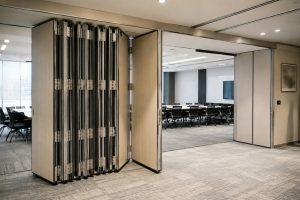
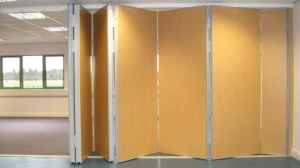
Folding acoustic partitions are movable wall systems built to divide spaces while limiting sound transfer between sections. They are suspended from an overhead track and fold or slide into a storage bay when not in use. The panels are filled with acoustic insulation material, and the perimeter seals engage when the partition is deployed, which is what makes them effective at blocking noise.
Each panel is independent but connects to the next to form a continuous wall. The system can stretch across large openings, and when it needs to be opened, the whole wall retracts in minutes. There is no need for tools or contractors.
Key features include space flexibility, noise reduction, ease of operation, and finishes that work with most modern interiors. The critical difference from permanent walls is reversibility. A permanent wall is fixed, expensive to remove, and limits how the space can be used going forward. Folding acoustic partitions give you the same division without that commitment.
Why Industries Prefer Folding Acoustic Partitions
Flexible Space Utilisation: Large halls, banquet areas, and open-plan floors can be broken into smaller rooms quickly. One space serves multiple purposes across the same day without any construction work.
Better Acoustic Control: Acoustic partitions reduce sound transfer between sections. This matters in offices, hospitals, and schools where noise directly affects concentration, privacy, and compliance.
Cost Savings Compared to Permanent Renovation: The same investment that would go into building a fixed wall goes into a system that works across multiple configurations.
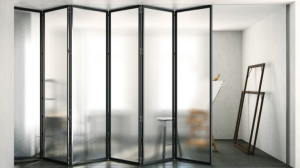
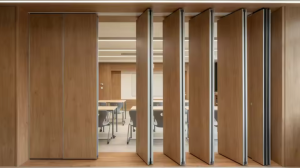
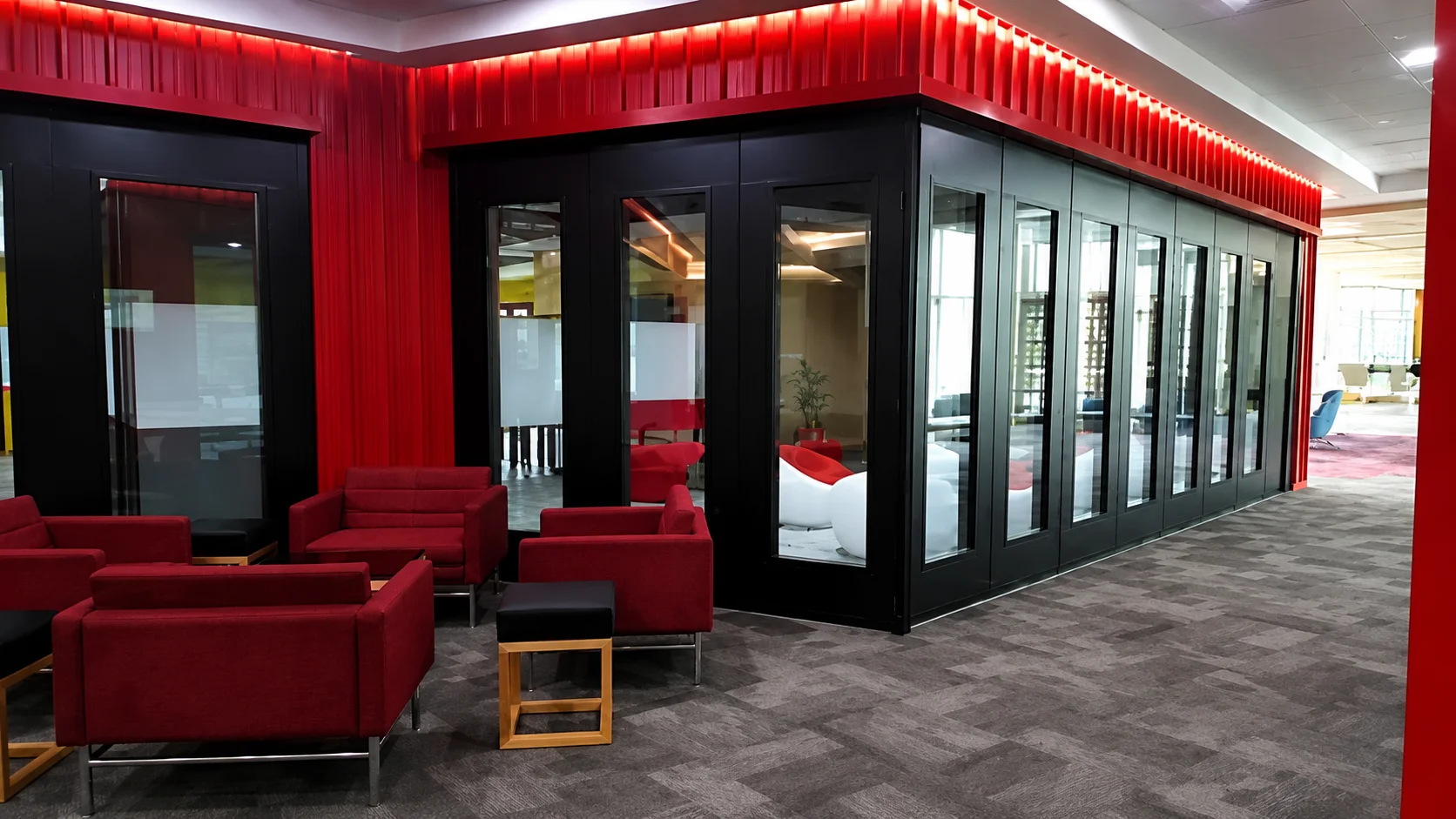
Modern Interior Design Appeal: These systems come in fabric, veneer, glass, and laminate finishes. They do not look temporary. Most installations are indistinguishable from the surrounding architecture.
Easy Operation and Maintenance: One person can usually operate most folding partition systems. The track and hardware need to be serviced from time to time, but daily operation does not require technical skill. This is important in changing space layout environments.
Top Industries Using Folding Acoustic Partitions
Corporate Offices
Open-plan offices are flexible but noisy and lack privacy and meeting areas. Folding acoustic partitions quickly create meeting or training rooms and open the space again when needed. Many modern offices now include these operable partitions to adapt as team structures change.
Hotels and Hospitality Industry
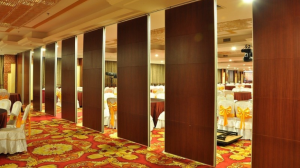
Banquet halls and conference venues must suit both large and small events. Folding acoustic partitions let them divide a big hall into smaller, finished rooms, control noise in each area, and quickly reconfigure layouts to match changing group sizes and client needs.
Educational Institutions
Schools and universities use folding acoustic partitions to turn halls and large rooms into smaller classrooms during the day while keeping noise separate. Training centres do the same, as staff can quickly reconfigure rooms themselves without waiting for facilities teams.
Healthcare Facilities
Hospitals and clinics need fast, flexible privacy. Foldable acoustic partitions allow for rapid setup, modification or removal of consultation, recovery and triage areas without permanent building work. Healthcare-grade panels are easier to clean than curtains, and their sound insulation helps keep conversations between patients and clinicians confidential.
Retail and Commercial Spaces
Retail spaces that host demos, consultations, or events need flexible zones. Showrooms can stay open for browsing or be divided into smaller areas for private meetings. Folding acoustic partitions match the store’s design and retract fully so the floor returns to an open layout.
Convention and Event Centres
Convention centres need spaces that suit many event types in a single day. Fixed walls are too rigid. Folding partition systems span wide openings, offer higher sound control, and let multi-purpose halls stay flexible and profitable across different events.
Key Benefits of Folding Acoustic Partitions
Improved Privacy and Noise Reduction: Sound separation between divided sections creates better working and meeting conditions. This is particularly relevant in offices, healthcare settings, and educational spaces.
Space Optimisation: The same floor area handles more functions across the day. Venues and organisations get more value from the space they already have.
Faster Space Reconfiguration: With folding partitions, lay-out changes that would take days with fixed construction take minutes. This is important in venues and offices with a tight schedule and frequent changeovers.
Professional Appearance: These systems are not makeshift. Finished properly, they look like permanent architecture. Fabric, veneer, and glass options give considerable design flexibility.
Cost-Effective Long-Term Solution: The upfront cost replaces repeated renovation expenses. A space that can adapt without structural work has a lower total cost over time than one that requires contractors every time requirements change.
Folding Acoustic Partitions vs Traditional Walls
Permanent walls give you one configuration. That is their main limitation. Folding acoustic partitions give you the same division and similar acoustic performance, but the space can still return to its original layout when needed. Relocation is also possible; the track and panels can be removed and reinstalled elsewhere, which is not an option with masonry or drywall. Long-term renovation costs are lower because you are not rebuilding each time requirements shift. For commercial spaces where usage patterns change over years or even months, that flexibility is a practical advantage over fixed construction.
How to Choose the Right Folding Acoustic Partitions
The starting point is acoustic performance. Different environments require different STC ratings, and getting this wrong means the partition fails at its primary job. Space size affects how the system is configured, how many panels are needed, and how the storage bay is positioned. Usage frequency matters for hardware selection; high-traffic environments need more durable track systems. Material and finish choice affect both aesthetics and maintenance. Finally, storage requirements need to be factored in. The partition has to go somewhere when it is open, and that space needs to be accounted for in the floor plan. Getting all of these right before specification avoids problems during installation.
How to Choose the Right Acoustic Partition Manufacturer
Acoustic performance certifications are the first thing to check. Manufacturers who test to ISO, ANSI, Euro Norm, or UL listing standards provide documented proof of how their products perform. Customisation matters because most installations are not standard sizes or finishes. At Malrox, we handle custom widths, heights, and finish combinations is more useful than one with only catalogue options.
Installation expertise is important. The partition system is only as good as its installation. Poorly fitted tracks and seals compromise acoustic performance regardless of panel quality. Product durability depends on the quality of hardware, panel construction, and seals. After-sales support, including maintenance, servicing and spare parts availability, affects long-term performance.
Conclusion
Corporate offices, hotels, schools, hospitals, retail spaces, and event venues all rely on folding acoustic partitions to get more out of their floor area. The benefits are practical: better noise control, faster reconfiguration, lower long-term costs, and layouts that adapt to changing requirements. Operable partitions are now a standard specification in most modern commercial interiors rather than an afterthought. If your space needs this kind of flexibility, work with a manufacturer who can deliver the right acoustic performance and installation quality. Malrox supplies movable partition systems that meet international standards and are backed by technically trained teams who work through the specification from the start. Choose the system that actually fits your space.